
More details
Collapse details
Date Published:
- January 1, 2008
- 3,049.26 KB
More details
Collapse details
Date Published:
Filesize:
- June 1, 2011
Preliminary Results from a Deep‐water Ecological Acoustic Recorder (EAR) Deployed off NW Ni‘i hau during RIMPAC‐2010
- 498.53 KB
More details
Collapse details
Date Published:
Filesize:
- July 1, 2012
Two ecological acoustic recorders (EARs) were deployed on July 17, 2010, one at a depth of 800 meters (m) off the northwest coast (21° 59.613' N, 160° 12.167' W), and the other at a depth of 16 m off the southeast coast of Ni'ihau (21° 47.306' N, 160° 11.964' W). These two sites were selected by personnel from the Naval Facilities Engineering Command, Pacific to provide acoustic data during the 2010 Rim of the Pacific (RIMPAC) exercise in the Hawaii Range Complex.
- 1,006.87 KB
Studying the biosonar activities of deep diving odontocetes in Hawaii and other western Pacific locations.
Journal of the Acoustical Society of America. 2014.
136(4,Part 2):2,246
More details
Collapse details
Date Published:
Publication:Ocean:Region:Species:Methods:
- October 31, 2014
Ecological acoustic recorders (EARs) have been deployed at several locations in Hawaii and in other western Pacific locations to study the foraging behavior of deep-diving odontocetes. EARs have been deployed at depths greater than 400 m at five locations around the island of Kauai, one at Ni’ihau, two around the island of Okinawa, and four in the Marianas (two close to island of Guam, one close to the island of Saipan and another close to the island of Tinian).
U.S. Navy East Coast passive acoustic monitoring efforts from 2009 to present.
7th International Workshop on Detection, Classification, Localization and Density Estimation of Marine Mammals using Passive Acoustics .
More details
Collapse details
Date Published:
Filesize:
- July 13, 2015
The U.S. Navy’s Atlantic Fleet conducts training and testing activities within the Northwest Atlantic Ocean and Gulf of Mexico, including the use of active sonar and explosives. In order to evaluate the impacts of these activities on marine mammals and other protected marine species, the Navy implemented a monitoring program to collect data on baseline animal presence, as well as exposure and response to Navy training and testing activities. Passive acoustic monitoring is an important component of the Navy’s monitoring efforts. Between 2009 and 2013, the Navy utilized effort-based monitoring metrics and targeted a number of different training and testing events for monitoring. Passive acoustic data was collected to monitor mysticete migration patterns in the mid-Atlantic, the effects of MFAS on odontocete vocalizations in North Carolina and Florida, and the potential effects of explosive training events off the coast of Virginia Beach, VA. Platforms included Marine Autonomous Recording Units (MARUs), High Frequency Acoustic Recording Packages (HARPs), Ecological Acoustic Recorders (EARs), and sonobuoys, among others. Additionally, the Marine Species Monitoring Program has funded the deployment of acoustic recording tags on several marine species including pilot whales and North Atlantic right whales, as well as behavioral response playback experiments with short-finned pilot whales off Cape Hatteras, North Carolina. In November 2013, the Navy began replacing effort-based monitoring metrics with objective based monitoring projects as a result of new environmental permits for Atlantic Fleet Training & Testing (AFTT). Passive acoustic monitoring remains a cornerstone of the revised long term goals, and continues to provide key data on marine mammal presence and behavior. Future work will focus on species classification and animal behavior.
- 897.80 KB
More details
Collapse details
Date Published:
Filesize:
- March 24, 2013
In order to train with mid-frequency active sonar (MFAS), the United States (U.S.) Navy has obtained a permit from the National Marine Fisheries Service (NMFS) under the Marine Mammal Protection Act and Biological Opinion under the Endangered Species Act. The Mariana Islands Range Complex (MIRC) Monitoring Plan was developed with NMFS to comply with the requirements under the permits. The monitoring plan and reporting requirements provide science-based answers to questions regarding whether or not marine mammals are exposed to, and react to, Navy MFAS and explosives. As such, the Navy developed the MIRC Monitoring Plan to conduct activities that meet these monitoring goals.
- 2,561.29 KB
More details
Collapse details
Date Published:
Filesize:
- January 1, 2016
A shore-based platform, incorporating two high-powered 25 × 150-millimeter binoculars ("Big Eyes"), was evaluated as an alternative approach for surveying marine areas for protected species (marine mammals and sea turtles). During a pilot study at a test site on Oahu (278-meter [m] elevation), humpback whale (Megaptera novaeangliae) blows were visible through Big Eyes at 37 kilometers (km) away in Beaufort Sea State (BSS) 2. This suggests the approach could be effective at detecting baleen and sperm whales from long distances, priority species under the United States Department of the Navy's Marine Species Monitoring Program.
- 3,303.10 KB
Surveying marine mammals with high-powered "bigeye" binoculars from a shore-based platform.
21st Biennial Conference on the Biology of Marine Mammals .
More details
Collapse details
Date Published:
Filesize:
- December 13, 2015
A shore-based platform, incorporating high-powered 25×150mm binoculars ("bigeyes"), was evaluated as an alternative approach for surveying marine areas for protected species (marine mammals and sea turtles). During a pilot study at a test site on Oahu (273m elevation), humpback whale blows were visible through bigeyes 37km away in Beaufort Sea State (BSS) 2. This suggests the approach could be effective at detecting baleen and sperm whales from long distances, priority species under the U.S. Navy's Marine Species Monitoring Program. Systematic scans using bigeyes were performed in Guam over 20 days from a north-facing (193m) and a northeast-facing (157m) shore station in May 2014 and March 2015. These two sites were chosen because of mostly unobstructed views of the ocean, as well as generally high BSS that prohibit visual surveys from small vessels in this area. A SnapZoom digiscoping adapter, equipped with an iPhone or GoPro, was attached to the bigeye eyepiece allowing collection of photos and video, complementing supertelephoto (500-800mm) photography on a DSLR to assist with species confirmation. Observers recorded 33 odontocete sightings comprised of 4 confirmed species (spinner and bottlenose dolphins, pilot and melon-headed whales), but no baleen or sperm whales were observed. Several sightings were distant from shore, including two unidentified dolphins observed 9 km offshore in BSS 6, cued by diving birds, and a group of 160 melon-headed whales 14km offshore in BSS 5. The species observed and the sighting rate of 0.28 per hour, or 1.7 per day, were comparable to results from smallvessel surveys in Guam, suggesting an overall low density of marine mammals, and large whales in particular, during this time of year. These results demonstrate that shore-based surveys can provide an alternative means of surveying an area where use of other research platforms are impractical or cost prohibitive.
- 91.65 KB
More details
Collapse details
Date Published:
Filesize:
- May 1, 2014
In order to train with mid-frequency active sonar (MFAS), the United States (U.S.) Navy has obtained a permit from the National Marine Fisheries Service (NMFS) under the Marine Mammal Protection Act (MMPA) and a Biological Opinion under the Endangered Species Act (ESA). The Navy has developed Monitoring Plans for individual Navy Range Complexes, guided by the Integrated Comprehensive Monitoring Program (ICMP), to provide marine mammal and sea turtle monitoring guidelines as required under the MMPA and the ESA (Department of the Navy 2010). The Hawaii Range Complex (HRC) Monitoring Plan, implemented in 2014, was developed with NMFS to comply with the requirements under the permits (Department of the Navy 2014). The ICMP provides the overarching framework for coordination of the U.S. Navy Monitoring Program (Department of the Navy 2010). The ICMP outlines objectives for range/project-specific Monitoring Plans and U.S. Navy-funded research relating to the effects of naval training and testing activities on protected marine species (Department of the Navy 2010).
- 2,787.98 KB
More details
Collapse details
Date Published:
Filesize:
- September 21, 2012
A marine mammal species verification and satellite tagging test was carried out as part of the Marine Mammal Monitoring on Navy Ranges (M3R) program in collaboration with the Cascadia Research Collective from 11 June to 02 August 2012 at the Pacific Missile Range Facility (PMRF). The primary objective of the test was to acoustically detect marine mammals at PMRF and vector observers to vocalizing animals. This allowed the team to: 1) Visually verify at-sea species acoustically detected on the PMRF undersea range 2) Deploy satellite tags on marine mammals prior to the Rim of the Pacific Exercise (RIMPAC) to monitor animals’ movement before, during and after navy training. 3) Photograph animals to create a photo-ID record for the Hawaii Range Complex 4) Collect biological samples (fecal/biopsy) 5) Document group composition and behavior
- 1,372.72 KB
More details
Collapse details
Date Published:
Filesize:
- May 1, 2021
Taking into consideration the multiple intermediate scientific objectives in the U.S. Navy’s Strategic Planning Process (DoN 2013b), the goals of this study are to assist the U.S. Navy and regulatory agencies with environmental planning and compliance by addressing the following questions: Which cetacean species occur over the outer continental shelf to the east of NSN, and how does occurrence fluctuate seasonally? What are the baseline behaviors and ecological relationships of offshore cetaceans within the study area? Do individual cetaceans exhibit site fidelity within specific regions of the study area over periods of weeks, months, or years? What is the seasonal extent of cetacean movements within and around U.S. Navy VACAPES training range boxes? Do cetaceans spend significant time within or primarily
- 3,862.99 KB
More details
Collapse details
Date Published:
Filesize:
- May 1, 2025
Taking into consideration the multiple intermediate scientific objectives in the U.S. Navy’s Strategic Planning Process (DoN 2013), the goals of this study are to assist the U.S. Navy and regulatory agencies with environmental planning and compliance
- 7,272.43 KB
More details
Collapse details
Date Published:
Filesize:
- April 1, 2020
Taking into consideration the multiple intermediate scientific objectives in the U.S. Navy’s Strategic Planning Process (DoN 2013b), the goals of this study are to assist the U.S. Navy and regulatory agencies with environmental planning and compliance by addressing the following questions: Which cetacean species occur over the outer continental shelf to the east of NSN, and how does occurrence fluctuate seasonally? What are the baseline behaviors and ecological relationships of offshore cetaceans within the study area? Do individual cetaceans exhibit site fidelity within specific regions of the study area over periods of weeks, months, or years? What is the seasonal extent of cetacean movements within and around U.S. Navy VACAPES training range boxes? Do cetaceans spend significant time within or primarily
- 9,368.29 KB
More details
Collapse details
Date Published:
Filesize:
- July 1, 2019
Taking into consideration the multiple intermediate scientific objectives in the U.S. Navy’s Strategic Planning Process (DoN 2013b), the goals of this study are to assist the U.S. Navy and regulatory agencies with environmental planning and compliance by addressing the following questions: Which cetacean species occur over the outer continental shelf to the east of NSN, and how does occurrence fluctuate seasonally? What are the baseline behaviors and ecological relationships of offshore cetaceans within the study area? Do individual cetaceans exhibit site fidelity within specific regions of the study area over periods of weeks, months, or years? What is the seasonal extent of cetacean movements within and around U.S. Navy VACAPES training range boxes? Do cetaceans spend significant time within or primarily
- 6,402.34 KB
More details
Collapse details
Date Published:
Filesize:
- May 1, 2018
Taking into consideration the multiple intermediate scientific objectives in the U.S. Navy’s Strategic Planning Process (DoN 2013b), the goals of this study are to assist the U.S. Navy and regulatory agencies with environmental planning and compliance by addressing the following questions: Which cetacean species occur over the outer continental shelf to the east of NSN, and how does occurrence fluctuate seasonally? What are the baseline behaviors and ecological relationships of offshore cetaceans within the study area? Do individual cetaceans exhibit site fidelity within specific regions of the study area over periods of weeks, months, or years? What is the seasonal extent of cetacean movements within and around U.S. Navy VACAPES training range boxes? Do cetaceans spend significant time within or primarily
- 6,780.82 KB
More details
Collapse details
Date Published:
Filesize:
- August 7, 2017
Taking into consideration the multiple intermediate scientific objectives in the U.S. Navy’s Strategic Planning Process (DoN 2013b), the goals of this study are to assist the U.S. Navy and regulatory agencies with environmental planning and compliance by addressing the following questions: • Which cetacean species occur over the outer continental shelf to the east of NSN, and how does occurrence fluctuate seasonally? • What are the baseline behaviors and ecological relationships of offshore cetaceans within the study area? • Do individual cetaceans exhibit site fidelity within specific regions of the study area over periods of weeks, months, or years? • What is the seasonal extent of cetacean movements within and around U.S. Navy VACAPES training range boxes? • Do cetaceans spend significant time within or primarily move through areas of U.S. Navy live-fire or Anti-Submarine Warfare training events?
- 4,742.41 KB
More details
Collapse details
Date Published:
Filesize:
- June 1, 2022
The United States (U.S.) Navy routinely conducts training and testing activities in the Virginia Capes (VACAPES) Operating Area (OPAREA) off the mid-Atlantic and Southeast U.S. The region encompassing the deeper waters of the continental shelf, shelf break, and continental slope has been recognized as an important habitat for multiple species of cetaceans. Kenney and Winn (1986) showed that the shelf edge from Cape Hatteras to Georges Bank was the second most intensively used cetacean habitat off the northeastern U.S. based on 3 years of surveys conducted by the Cetacean and Turtle Assessment Program (CETAP 1982). This progress report includes all offshore monitoring activities conducted in 2021. The goals of this effort focus on addressing fundamental information gaps related to marine mammal occurrence, exposure, and response as identified by the U.S. Navy’s Integrated Comprehensive Monitoring Program (DoN 2010) and recommendations provided by a Scientific Advisory Group review (DoN 2011).
- 4,758.82 KB
More details
Collapse details
Date Published:
Filesize:
- April 1, 2024
Taking into consideration the multiple intermediate scientific objectives in the U.S. Navy’s Strategic Planning Process (DoN 2013), the goals of this study are to assist the U.S. Navy and regulatory agencies with environmental planning and compliance by addressing the following questions: Which cetacean species occur within the VACAPES OPAREA off Virginia, and how does occurrence fluctuate seasonally? What are the baseline behaviors and ecological relationships of offshore cetaceans within the study area? Do individual cetaceans exhibit site fidelity within specific regions of the study area over periods of weeks, months, or years? What is the seasonal extent of cetacean movements within and around U.S. Navy VACAPES training range boxes? Do cetaceans spend significant time within or primarily move through areas of U.S. Navy live-fire or Anti-Submarine Warfare training events?
- 4,190.34 KB
More details
Collapse details
Date Published:
Filesize:
- June 1, 2011
In order to address requirements under the Marine Mammal Protection Act Letters of Authorization permitted to the U.S. Navy, three U.S. Navy civilian marine mammal observers (MMOs; Ms. Amy Farak, Ms. Julie Rivers, and Dr. Robert Uyeyama) and one U.S. Navy contractor (Dr. Thomas A. Jefferson) participated in two consecutive ASW exercise events in the Hawaii Range Complex from 15‐22 February, 2011 (Figure 1). These MMOs were stationed aboard a U.S. Navy destroyer, hereafter referred to as DDG‐D. The goals of the monitoring and this study were to: 1. Collect data to assess the effectiveness of the Navy lookout team. 2. Obtain data to characterize the possible exposure of marine species to mid‐frequency active sonar (MFAS). 3. Achieve close coordination between the contracted aerial survey team, Navy aircraft on the range, range control, and th
- 920.44 KB
More details
Collapse details
Date Published:
Filesize:
- July 21, 2015
This report forms part of a multi-institutional monitoring project intended to provide information on the species composition, population identity, density and baseline behavior of marine mammals and sea turtles present in United States (U.S.) Navy range complexes along the U.S. Atlantic coast. The program began in 2007, with baseline aerial and vessel surveys and a passive acoustic monitoring program in Onslow Bay, North Carolina, and has since expanded to include study areas off Jacksonville, Florida, and Cape Hatteras, North Carolina. Off Cape Hatteras, four years of surveys have provided information on the complex patterns of distribution and diversity of the marine mammals and sea turtles in this highly productive area. The current report builds on this past body of work and describes activities conducted during both the Deep Divers and Satellite Tagging projects conducted off Cape Hatteras between January and December 2014. This constitutes the second year of the Deep Divers project, which focuses on the distribution and ecology of several deep-diving odontocete species, including: beaked whale (Cuvier’s beaked whale: Ziphius cavirostris and Mesoplodon spp.); short-finned pilot whale (Globicephala macrorhynchus); and sperm whale (Physeter macrocephalus). To achieve a more robust picture of the medium-term movement patterns of these and other odontocete cetaceans in the Cape Hatteras survey area, we began a satellite tagging project during the reporting period. Satellite tagging effort and associated sightings are presented here; preliminary analyses of movement data are available in a separate report generated by the Cascadia Research Collective (see Baird et al. 2015). All survey effort in the Cape Hatteras study site this year was dedicated to Deep Divers and Satellite Tagging projects, so we also report ongoing photographic identification work for this area in this report.
- 6,832.28 KB
Protected Species Monitoring in the Proposed Undersea Warfare Training Range Offshore of Jacksonville, FL .
SEAMAMMS (Southeast and Mid-Atlantic Marine Mammal Symposium). .
More details
Collapse details
Date Published:
Filesize:
- March 22, 2013
A multi-institutional marine protected species monitoring program involving aerial, vessel and acoustic surveillance techniques was implemented at the proposed Undersea Warfare Training Range (USWTR) offshore of Jacksonville, Florida in January 2009. Visual surveys, in conjunction with acoustic sampling methods, have been conducted to investigate cetacean and sea turtle occurrence, distribution and abundance. Through December 2012 a total of 722 aerial tracklines (60687 km) were flown, resulting in 641 cetacean sightings, encompassing 8079 individuals. Tursiops truncatus and Stenella frontalis were the most frequently encountered, followed by Grampus griseus, Globicephala macrorhynchus, Balaenoptera acutorostrata, Steno bredanensis, Eubalaena glacialis, Megaptera novaeangliae, Physeter macrocephalus, and Kogia spp. Cetaceans were encountered 126 times during the 3403 km of vessel surveys, totaling 950 individuals. Sightings consisted of S. frontalis, T. truncatus, G. macrorhynchus, and G. griseus. Across all visual platforms, T. truncatus were encountered throughout the range, whereas S. frontalis, S. bredanensis, and E. glacialis were recorded exclusively in shelf waters. All other species were detected only in pelagic waters. The towed passive acoustic array was deployed during 21 vessel surveys, generating 24.2 hours of recordings, detecting all four sighted species. High frequency acoustic recording packages (HARPs) were deployed at two sites in the study area for long‐term passive acoustic monitoring. The HARP data have been analyzed for diel, seasonal, and interannual trends in cetacean occurrence. Surveys are scheduled to continue in order to asses long‐term habitat usage patterns in the USWTR.
- 399.45 KB
More details
Collapse details
Date Published:
Filesize:
- March 27, 2015
The Pacific Islands Fisheries Science Center’s (PIFSC) Cetacean Research Program (CRP) has been conducting visual surveys for cetaceans in the waters surrounding Guam and the Commonwealth of the Northern Mariana Islands (CNMI) and collecting long-term passive acoustic monitoring data at two sites in CNMI as part of an ongoing effort to develop a record of cetacean occurrence in the region. Visual surveys, conducted aboard small boats (7.6 – 12.2 m), have been ongoing since 2010 off the southern Mariana Islands of Guam, Rota, Saipan, Tinian, and Aguijan. T
- 3,614.97 KB
More details
Collapse details
Date Published:
Filesize:
- July 1, 2018
The U.S. Navy has been using High-frequency Acoustic Recording Packages (HARPs) to conduct passive acoustic monitoring in waters offshore of Virginia, North Carolina, and Florida to determine patterns of occurrence and distribution of cetacean species and anthropogenic sounds since 2007. Many baleen whale species and six known odontocete taxa (Kogia spp., Risso’s dolphins (Grampus griseus), sperm whales (Physeter macrocephalus), Cuvier’s beaked whale (Ziphius cavisrostris), Gervais’ beaked whale (Mesoplodon europaeus), and Blainville’s beaked whale (M. densirostris)) had previously been identified within these recordings; however, a much larger number of detections of unidentified odontocete clicks remained. This work looked at steps toward classification of these unidentified odontocete clicks.
- 10,763.43 KB
More details
Collapse details
Date Published:
Filesize:
- September 8, 2011
This report provides information relative to marine mammals at the Pacific Missile Range Facility (PMRF) before, during and after the Feb 2011 Submarine Commanders Course exercise (SCC) between 11 and 22 Feb 2011.
- 837.64 KB
More details
Collapse details
Date Published:
- January 10, 2016
More details
Collapse details
Date Published:
Filesize:
- January 1, 2014
This report forms part of a multi-institutional monitoring project intended to provide information on the species composition, population identity, density and baseline behavior of marine mammals and sea turtles present in Navy range complexes along the Atlantic coast. This program began in 2007, with baseline aerial and vessel surveys and a passive acoustic monitoring program in Onslow Bay, North Carolina and has since expanded to include study areas off Jacksonville, Florida and Cape Hatteras, North Carolina. In Onslow Bay, six years of monitoring have yielded a comprehensive picture of the density, distribution and abundance of marine mammals and sea turtles and provided new insights into residency patterns among pelagic delphinid cetaceans in this region. More than four years of monitoring in Jacksonville have provided similar information on the density and distribution of marine mammals and sea turtles in this area. In Cape Hatteras, almost three years of surveys have provided preliminary information on the complex patterns of distribution and diversity of the marine mammals and sea turtles in this highly productive area. The current report builds on this past body of work and describes monitoring activities that occurred between January and December 2013.
- 8,719.07 KB
More details
Collapse details
Date Published:
Filesize:
- January 1, 2014
This report forms part of a multi-institutional monitoring project intended to provide information on the species composition, population identity, density and baseline behavior of marine mammals and sea turtles present in Navy range complexes along the Atlantic coast. This program began in 2007, with baseline aerial and vessel surveys and a passive acoustic monitoring program in Onslow Bay, North Carolina and has since expanded to include study areas off Jacksonville, Florida and Cape Hatteras, North Carolina. In Onslow Bay, six years of monitoring have yielded a comprehensive picture of the density, distribution and abundance of marine mammals and sea turtles and provided new insights into residency patterns among pelagic delphinid cetaceans in this region. More than four years of monitoring in Jacksonville have provided similar information on the density and distribution of marine mammals and sea turtles in this area. In Cape Hatteras, almost three years of surveys have provided preliminary information on the complex patterns of distribution and diversity of the marine mammals and sea turtles in this highly productive area. The current report builds on this past body of work and describes monitoring activities that occurred between January and December 2013.
- 10,899.34 KB
More details
Collapse details
Date Published:
Filesize:
- November 16, 2009
This document comprises the second annual progress report to the Department of the Navy for the reporting period of July 2008 through June 2009 (Year Two). It includes data from the monitoring program for protected marine species at the proposed site of an Undersea Warfare Training Range (USWTR) in Onslow Bay, North Carolina.
- 24,884.42 KB
More details
Collapse details
Date Published:
Filesize:
- October 1, 2010
Aerial Survey Monitoring for Marine Mammals and Sea Turtles in the Hawaii Range Complex in Conjunction with a Navy Training Event
- 1,077.43 KB
More details
Collapse details
Date Published:
Filesize:
- March 23, 2015
Aerial surveys to monitor marine mammals and sea turtles (MM/ST) were conducted in conjunction with a U.S. Commander Pacific Fleet training event in the Hawaii Range Complex on the Pacific Missile Range Facility Barking Sands Tactical Underwater Range and Barking Sands Underwater Range Extension between Kauai and Niihau, Hawaii during 18–20 February 2014. The Submarine Commander’s Course (SCC) training event was conducted during 17–20 February 2014. Two surface ships, both equipped with the AN/SQS-53C sonar, participated in the February 2014 training.
- 2,143.16 KB
Pacific Missile Range Facility (PMRF) Species Verification and Satellite Tagging Test: January 2012.
More details
Collapse details
Date Published:
Filesize:
- January 1, 2012
During January 2012, with funding provided by the Chief of Naval Operations (CNO) N45 Energy and Environmental Readiness Division, the Marine Mammal Monitoring on Navy Ranges ( M3R) program supported a marine mammal species verification and satellite tagging test on the Pacific Missile Range Facility (PMRF) prior to a Submarine Commander Course (SCC)
- 1,778.01 KB
Autonomous recorder based monitoring of marine mammal acoustic behaviors in relation to mid-frequency active sonar and other variables.
20th Biennial Conference on the Biology of Marine Mammals .
More details
Collapse details
Date Published:
Filesize:
- December 9, 2013
Passive acoustic data were collected from nine Marine Autonomous Recording Units (MARUs) deployed in a rectangular array 60-150 km off Jacksonville FL, USA. Units were deployed for 26 days during fall 2009, and 37 days in winter 2009-2010. The study area coincides with the U.S. Navy’s planned Undersea Warfare Training Range (USWTR). Data were manually reviewed using the MATLAB program Triton to create long-term spectral averages (LTSAs) and spectrograms, which were used to log marine mammal vocalization events, man-made noise and mid-frequency active sonar. Patterns and probabilities of vocalization events by species or species groups were characterized and related to sonar activities. Seasonal and diel patterns were qualitatively characterized. Vocalizations were detected for minke whales, North Atlantic right whales, sei whales, humpback whales, sperm whales, the blackfish group, and delphinids. Minke whale vocalization events occurred almost continuously during the winter deployment period but absent in fall. Right whale events occurred mostly during winter at shallow-water sites, but unexpectedly, also were detected at deep-water sites. Sperm whale events occurred exclusively near the continental shelf break, and exhibited a strong diel pattern with almost all vocalizations occurring between dusk and dawn. Less obvious patterns were apparent for delphinid events, probably because identification to the species level was not possible. Minke whale events had a strong negative relationship with sonar events when data from all sites were combined. These results provide an initial assessment of marine mammal occurrence and distribution within the U.S. Navy’s planned USWTR and provide important insights on the presence or absence of species-specific vocal responses to sonar events. Ongoing work includes using automated classification methods to identify delphinid whistles to species, and working with researchers at St. Andrews University to develop robust statistical approaches for analyzing the relationship between mid-frequency active sonar and vocal behaviors of marine mammals
- 208.53 KB
More details
Collapse details
Date Published:
Filesize:
- March 22, 2022
The United States (US) Navy uses lookouts (LOs) to detect objects in the water in the vicinity of ships. One class of object that LOs are trained to detect is marine mammals ; this forms an important component of the Navy’s procedures for marine mammal mitigation during training activities . As well as dedications of marine mammals by these LOs, detections of marine mammals may also be made by other members of the ship’s crew such as officers on the bridge (“watchstanders”) or sonar technicians, although acoustic detections require visual confirmation. We refer to these personnel together as the “lookout team” (LT). The primary goal of this project was to determine how effective LTs are at detecting marin
- 4,078.84 KB
- California sea lion
- Green turtle
- Leatherback turtle
- Loggerhead turtle
- Kemp's Ridley turtle
- Blue whale
- Fin whale
- Humpback whale
- Minke whale
- Atlantic white-sided dolphin
- Common dolphin
- Harbor porpoise
- Killer whale
- Pantropical spotted dolphin
- Pilot whale
- Risso's dolphin
- Rough-toothed dolphin
- Short-finned pilot whale
- Sperm whale
- Spotted dolphin
- Striped dolphin
More details
Collapse details
Date Published:
Filesize:
- January 1, 2010
This report covers a number of activities carried out by the Cetacean Research Program (CRP) at the Pacific Islands Fisheries Science Center (PIFSC) in 2009 and 2010 supported with partial funding from U.S. Navy Pacific Fleet (PACFLT). The report is intended to provide preliminary data and results from 4 survey efforts between Hawaii and Guam in early 2010.
- 807.19 KB
More details
Collapse details
Date Published:
Filesize:
- May 1, 2017
This report describes the results of a study designed to explore some of the factors that may contribute to ambiguity in species identification using delphinid whistles. We have obtained field recordings of wild and trained (captive) odontocetes in their natural environment under a variety of scenarios, including at the sea surface, at multiple depths in the water column, in different geographic locations, and in different behavioral states
- 2,105.04 KB
More details
Collapse details
Date Published:
Filesize:
- May 20, 2026
From 2014 to2021, a comprehensive acoustic monitoring effort was conducted within the boundaries of the Virginia Capes Range Complex to study marine mammal presence and ambient noise levels. The objective was to characterize the vocalizations of marine mammal species in the area, identify their seasonal presence patterns, and assess the potential impacts of naval operations on these species. This report presents the findings from the analysis of data collected using six High-frequency Acoustic Recording Packages (HARPs; Wiggins & Hildebrand 2007), which were strategically deployed within the Virginia Capes Range Complex near Norfolk Canyon (Figure 1 & Table 1).
- 4,651.75 KB
More details
Collapse details
Date Published:
Filesize:
- May 20, 2026
From 2012 to 2020, a comprehensive acoustic monitoring effort was conducted within the boundaries of the Virginia Capes Range Complex to study marine mammal presence and ambient noise levels. The objective was to characterize the vocalizations of marine mammal species in the area, identify their seasonal presence patterns, and assess the potential impacts of naval operations on these species. This report presents the findings from the analysis of data collected using 12 High-frequency Acoustic Recording Packages (HARPs; Wiggins & Hildebrand 2007), which were strategically deployed offshore from Cape Hatteras within the southern portion of the Virginia Capes Range Complex (Figure 1 & Table 1).
- 5,094.49 KB
More details
Collapse details
Date Published:
Filesize:
- January 1, 2023
Analysis of scat samples from animals is a non‐invasive technique that can provide important data on animal diet, hormone levels, microbiome, and genetics. The use of a trained Conservation Canine (K9) to detect marine mammal scat at sea has been proven to be useful in the Pacific Northwest with Southern Resident Killer Whales (Lundin et al. 2016) and in other unpublished reports and media, but until now, had not been documented in Hawaii. In order to explore the viability of this method in Hawaii, the Navy invested in a pilot study, where the K9 was successfully trained to detect and ‘direct’ boat drivers – via changes in behavior – to the scat of three species of marine mammals (G. macrorynchus, K. breviceps, and P. crassidens).
- 408.64 KB
More details
Collapse details
Date Published:
Filesize:
- May 1, 2009
Overall, the monitoring survey effort demonstrated the feasibility of performing search and behavioral observations of target species without interfering with at-sea naval training involving multiple large vessels, aircraft (both fixed-wing and helicopters), and submarines. This information can be used to continue developing effective monitoring approaches and to gather behavioral data, including baseline data, on the potential effects of Navy activities on marine resources as required under the Navy’s marine species monitoring plan for the Hawaii Range Complex. Recommendations for marine mammal monitoring during future similar Navy activities have been presented.
- 923.01 KB
Patterns of residency of three species of odontocetes along the shelf break of the U.S. east coast.
20th Biennial Conference on the Biology of Marine Mammals .
More details
Collapse details
Date Published:
Filesize:
- December 9, 2013
Our understanding of the movements and patterns of residency of pelagic cetaceans is limited because it is difficult to obtain repeated samples from animals that live their entire lives far from shore. Surveys of such populations typically occur at broad spatial scales, interspersed by long time periods and often do not allow for identification of individual animals. We used dedicated photo-identification techniques as part of the U.S. Navy’s Atlantic Fleet Testing and Training program to identify patterns of residency of odontocetes at three sites along the shelf break of the U.S. east coast ranging from 50 to 150 km from shore. Our surveys began in Onslow Bay, NC in 2007, and Jacksonville, FL and Cape Hatteras, NC in 2009. In Onslow Bay, we have re-sighted 7 of 139 (5%) Tursiops truncatus and 3 of 78 (4%) Stenella frontalis. It is likely that these T. truncatus include both offshore and coastal ecotypes; we are currently analyzing biopsy samples obtained during these surveys to address this proposition. We have not matched any of the T. truncatus to other catalogs from coastal waters, but the S. frontalis appear to range widely over the shelf. For example, one S. frontalis photographed at the offshore site in September 2011 was observed in June 2001 and June 2002 in the near-shore waters of Onslow Bay. In Jacksonville, we have catalogued 41 T. truncatus and 60 S. frontalis and have resighted 2 of 60 (3%) S. frontalis. We have identified 117 individual Globicephala macrorhynchus off Cape Hatteras and have matched 14 of 117 (12%) individuals. To date we have found no matches among the three sites. The re-sightings of these species within the three study areas occurred over multiple seasons and years, and suggest a surprising degree of residency by individual odontocetes in these offshore waters.
- 1,309.70 KB
Movement and foraging behavior of short-finned pilot whales in the Mid-Atlantic Bight: Importance of bathymetric features and implications for management.
Marine Ecology Progress. 2017.
584:245-257
More details
Collapse details
Date Published:
Publication:Ocean:Region:Species:Methods:
- December 7, 2017
Shelf break systems are ecologically important regions of the ocean, and are often characterized by enhanced productivity and high densities of species from lower to upper trophic levels. Along with associated submarine canyons, shelf break regions provide important foraging habitat for deep-diving odontocetes such as pilot whales. Short-finned pilot whales Globicephala macrorhynchus are found throughout tropical and subtropical waters, but there is little information on the habitat use of this species in the northwest Atlantic. We examined the movements and foraging behavior of short-finned pilot whales using data from satellite tags (n = 33) deployed off Cape Hatteras, North Carolina, USA in 2014 and 2015. Pilot whale tracks ranged from Cape Lookout, North Carolina north to Georges Bank, with movements and habitat use primarily focused north of Cape Hatteras. We observed 2 distinct modes of behavior, with most pilot whales showing a strong affinity for the continental shelf break and others following offshore meanders of the Gulf Stream for all or part of the observed track. We used first passage time (FPT) to assess arearestricted search behavior, and found that FPT was significantly higher close to the shelf break and in submarine canyons. Our results demonstrate the importance of steep bathymetric features to the foraging habitat and distribution of short-finned pilot whales in this region. In addition, our findings suggest that pilot whales in the Mid-Atlantic Bight may have developed specialized foraging behaviors for targeting steep bathymetric gradients, and that their latitudinal distribution may be limited to regions where this foraging strategy is effective.
More details
Collapse details
Date Published:
Filesize:
- January 1, 2020
Long-term high-frequency acoustic recording packages (HARPs) at eight sites along the western North Atlantic shelf break.
- 1,430.35 KB
- Blue whale
- Fin whale
- Humpback whale
- North Atlantic right whale
- Sei whale
- Atlantic white-sided dolphin
- Blainville's beaked whale
- Bottlenose dolphin
- Common dolphin
- Goose-beaked whale
- False killer whale
- Gervais' beaked whale
- Killer whale
- Northern bottlenose whale
- Pilot whale
- Rough-toothed dolphin
- Short-finned pilot whale
- Sowerby's beaked whale
- Sperm whale
- Spotted dolphin
- Striped dolphin
- True's beaked whale
More details
Collapse details
Date Published:
Filesize:
- May 1, 2014
In order to train with mid-frequency active sonar (MFAS), the United States (U.S.) Navy has obtained a permit from the National Marine Fisheries Service (NMFS) under the Marine Mammal Protection Act and a Biological Opinion under the Endangered Species Act. The Hawaii Range Complex Monitoring Plan, implemented starting in November 2009, was developed with NMFS to comply with the requirements under the permits.
- 2,225.02 KB
More details
Collapse details
Date Published:
Filesize:
- September 9, 2024
We report significant pathological findings from 250 stranding investigations of 20 cetacean species in the Pacific Islands region between 2006 and 2022. Full or partial necropsies of 196 of the 250 stranding cases (78.4%) resulted in a diagnosis or multiple diagnoses associated with death in 126 cases. Natural disease accounted for 60.3% of stranded animals; approximately half were in poor body condition at time of death due to chronic illness. Morbillivirus and Brucella sp. infections caused mortality in eleven species, including striped dolphins and the Longman’s beaked whale. Toxoplasma infection, of anthropogenic cause in Hawaiʻi, led to the deaths of two spinner dolphins. Pygmy and dwarf sperm whales, beaked whales and pilot whales showed heavy parasitism by nematodes, cestodes and trematodes. Approximately 12.7% of stranded individuals were perinates/neonates, with three cases of dystocia with maternal mortality. Anthropogenic trauma was observed in 30.2% of strandings. In seven Cuvier’s beaked whales, cranial and/or microvascular hemorrhages were categorized as trauma. Vertebral and skull fractures were attributed to direct vessel strikes for two pygmy sperm whales, a Cuvier’s beaked whale, a humpback whale calf and a striped dolphin. Blast trauma was observed in three Fraser’s dolphins that were part of an uncommon stranding event. Significant plastic debris, and/or fishery debris were found in stomachs of six species and fatal fishhook penetration occurred in a Submitted in Support of the U.S. Navy’s 2023 Annual Marine Species Monitoring Report for the Pacific STANDARD FORM 298 Back (Rev. 8/98) bottlenose dolphin. This study highlights the value of carcass examinations in a region inhabited by small island associated populations where carcass recovery rates are low, and cetaceans face an array of natural and anthropogenic threats.
- 1,496.52 KB
- Humpback whale
- Blainville's beaked whale
- Bottlenose dolphin
- Goose-beaked whale
- Dwarf sperm whale
- False killer whale
- Fraser's dolphin
- Killer whale
- Longman’s beaked whale
- Melon-headed whale
- Pilot whale
- Pygmy killer whale
- Risso's dolphin
- Rough-toothed dolphin
- Short-finned pilot whale
- Sperm whale
- Spinner dolphin
- Spotted dolphin
- Striped dolphin
Inter and intra specific variation in echolocation signals among odontocete species in Hawaii, the northwest Atlantic and the temperate Pacific.
Journal of the Acoustical Society of America. 2016.
139 (4, Part 2):2061
More details
Collapse details
Date Published:
Publication:Ocean:Region:Species:Methods:
- April 1, 2016
Odontocete species use echolocation signals (clicks) to forage and navigate. The aim of this study is to explore inter- and intra-specific variation in clicks among odontocete species in the Northwest Atlantic, Temperate Pacific, and Hawaii. Clicks were examined for seven species of delphinids in the Northwest Atlantic; common dolphin, Risso’s dolphin, pilot whale, rough-toothed dolphin, striped dolphin, Atlantic spotted dolphin, and bottlenose dolphin. Newly developed PAMGuard tools were used to automatically measure a suite of click parameters. Five parameters were compared among species; duration, center frequency, peak frequency, sweep rate, and number of zero crossings. Significant differences in duration, center and peak frequency were evident among species within this study area (Dunn’s test with Bonferroni adjustment p
Current
Acoustic Ecology of Northwest Atlantic Shelf Break Cetaceans and Effects of Anthropogenic Noise Impacts
Project Objectives
Assess the acoustic niche of marine mammal species and anthropogenic contributors to disturbance
Complete
Baseline Monitoring for Marine Mammals in the East Coast Range Complexes (passive acoustics)
Project Objectives
Assess occurrence, density, and vocal activity of marine mammals and sea turtles in key areas of Navy range complexes
Current
North Atlantic Right Whale Monitoring, Conservation, and Protection
Project Objectives
Assess occurrence, habitat use, and behavior of North Atlantic right whales in the mid-Atlantic region
Complete
Passive Acoustic Monitoring of Marine Mammals in the Gulf of Alaska
Project Objectives
Determine the spatial distribution and occurrence of beaked whales, other odontocetes, and baleen whales in offshore areas using bottom-mounted passive acoustic recorders and deep-diving autonomous gliders
Current
Southern California Beaked Whale Occurrence (formerly "Passive Acoustic Monitoring of Marine Mammals in Southern California Range Complex (SOCAL)")
Project Objectives
Determine the distribution and temporal patterns of beaked whale occurrence in the waters within and outside the Southern California Range Complex (SOCAL). Use passive acoustic monitoring to determine what species are present in SOCAL and examine spatial and temporal patterns.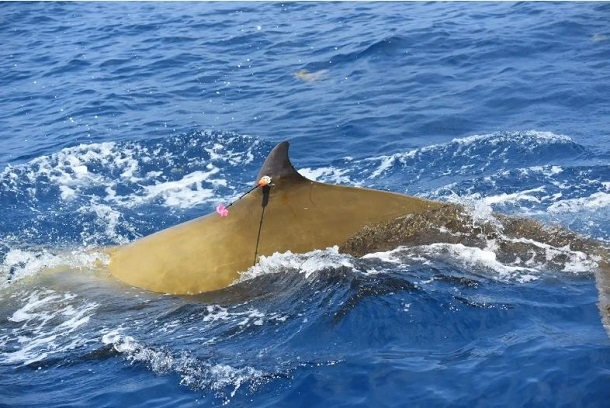
Successful CEE Trial with the USS Thomas Hudner
July 24, 2024
In July 2024, the Atlantic Behavioral Response Study, led by Duke University, conducted a successful controlled exposure experiment (CEE) involving the USS Thomas Hudner and tagged goose-beaked whales off Cape Hatteras. The study assessed the whales' behavioral responses to Continuous Active Sonar (CAS) signals, utilizing a High Frequency Recording Package (HARP) for sound recordings and coordination with the USS Thomas Hudner for sonar signal transmission. Preliminary observations suggested minimal behavioral changes in the focal whale, Zc150, during the experiment.